Sauda is located on Norway’s southwestern coast. The municipality has a long industrial heritage centred around the Sauda smelter, a metal processing plant that was established in 1915 and is now owned by Eramet.
With a strong industrial foundation, reliable hydropower and proximity to the sea, Sauda is well suited for new energy-intensive projects while also being positioned to play an important role in the green transition.
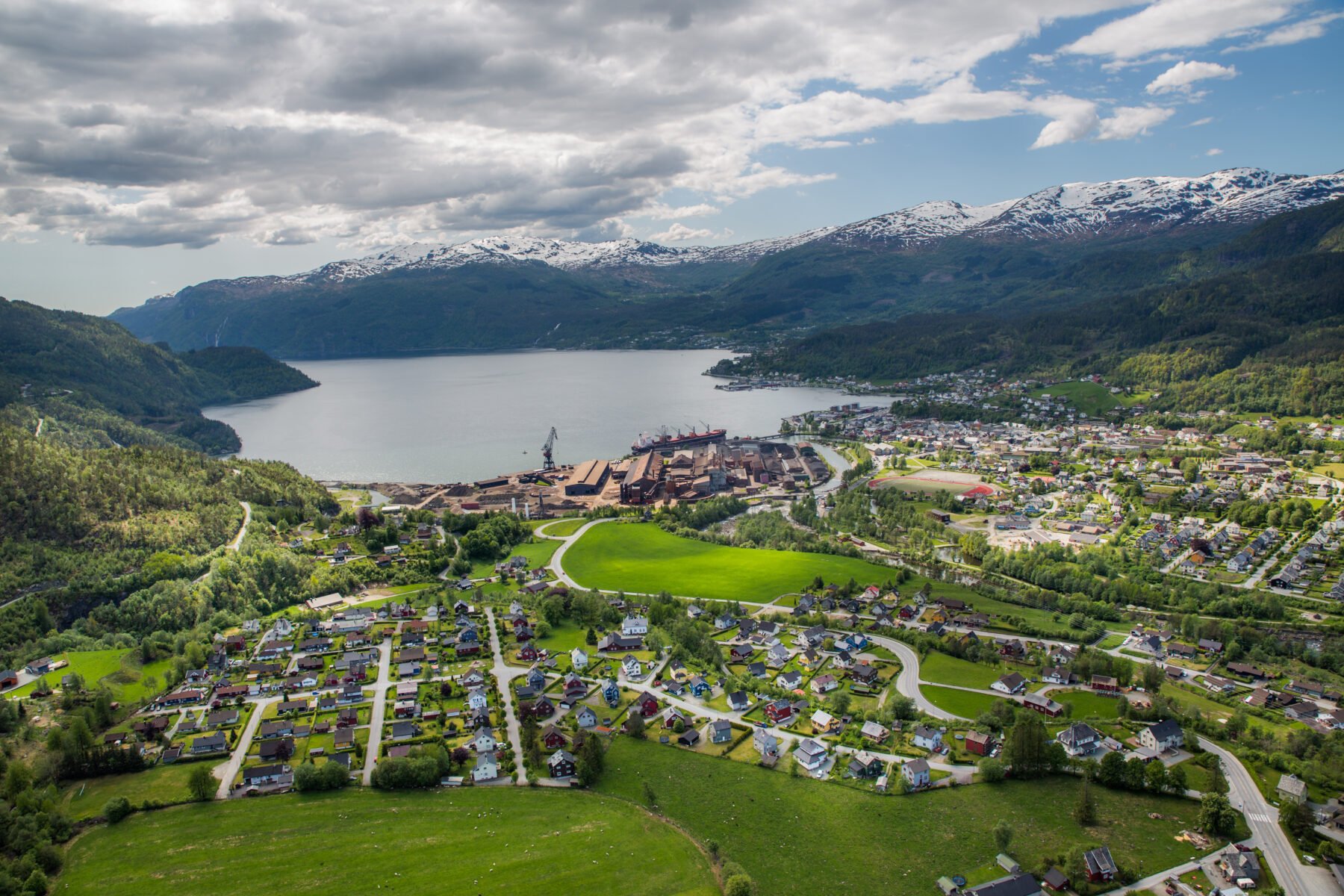 Sauda
Sauda
Why Sauda stands out
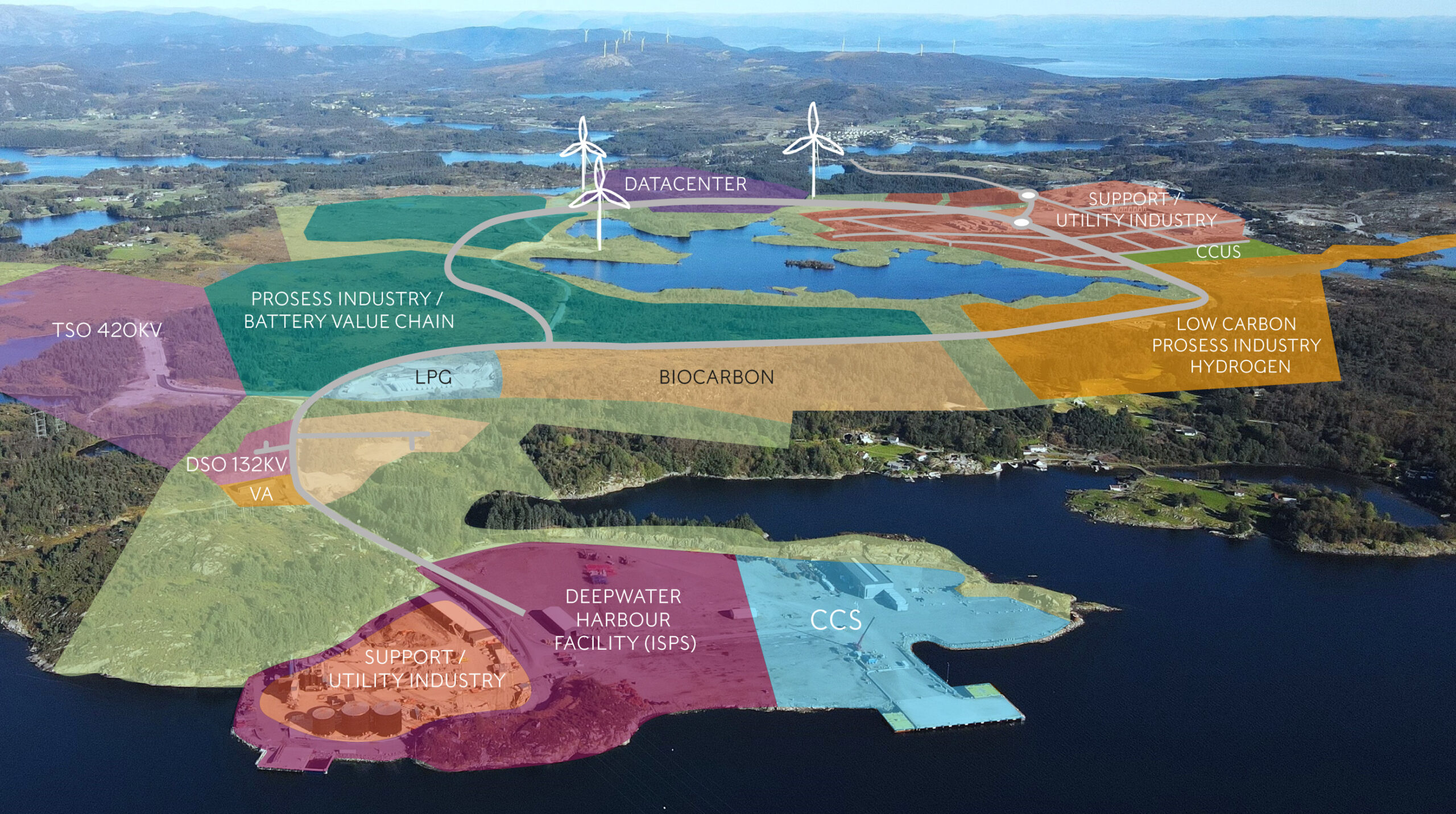
Sauda functions as a regional power hub with strong grid stability and good potential for redundancy, an important advantage for energy-intensive operations. Combined with process industry expertise and available sites, this creates a solid base for new industrial development.
Sauda’s compact environment is also major strength. With industrial players located close to one another, collaboration becomes easier and the potential for shared infrastructure and efficient resource use increases. This creates good conditions for industrial symbiosis, where one company’s surplus heat, gases or by products can become another company’s inputs. By connecting industries, Sauda can build circular value chains and create new business opportunities.
Key companies and opportunities
Sauda’s industrial ecosystem includes major players such as Eramet, which is also advancing carbon capture solutions in Sauda. Work linked to pilot initiatives could become an important step towards lower emissions and new industrial value chains.
Surplus heat is another opportunity. Sauda Energi already supplies district heating based on industrial surplus heat, but there is more heat available than the community needs, especially in summer. This creates opportunities for new businesses that can use heat as a year-round input, including industrial processing and aquaculture.
Industrial gases are another important part of the ecosystem. Nippon Gases provides gases such as oxygen, nitrogen and argon to the process industry and other developed markets such as aquaculture.
While aquaculture is an established industry, it still offers growth potential, including post-smolt production and potential future developments in closed land-based systems. Sauda Aqua is a new local actor in this segment. Organic waste handling is a challenge in the industry, but this could become an opportunity through the production of biogas, using fish waste, agricultural waste and household waste as feedstock.
New growth areas include green hydrogen and ammonia-based solutions, where Iversen eFuels is exploring opportunities linked to low-emission fuels, particularly for ammonia as a maritime fuel.
Rogaland has a strong position in biogas development, with multiple initiatives underway and an existing natural gas infrastructure that could be adapted to biogas. For Sauda, this creates a realistic possibility to turn local waste streams into energy, strengthening circularity and reducing emissions.
Sauda is also relevant for data centres and battery energy storage systems (BESS), thanks to renewable electricity and grid stability. Underground facilities, such as mountain halls, can offer secure and space-efficient solutions.
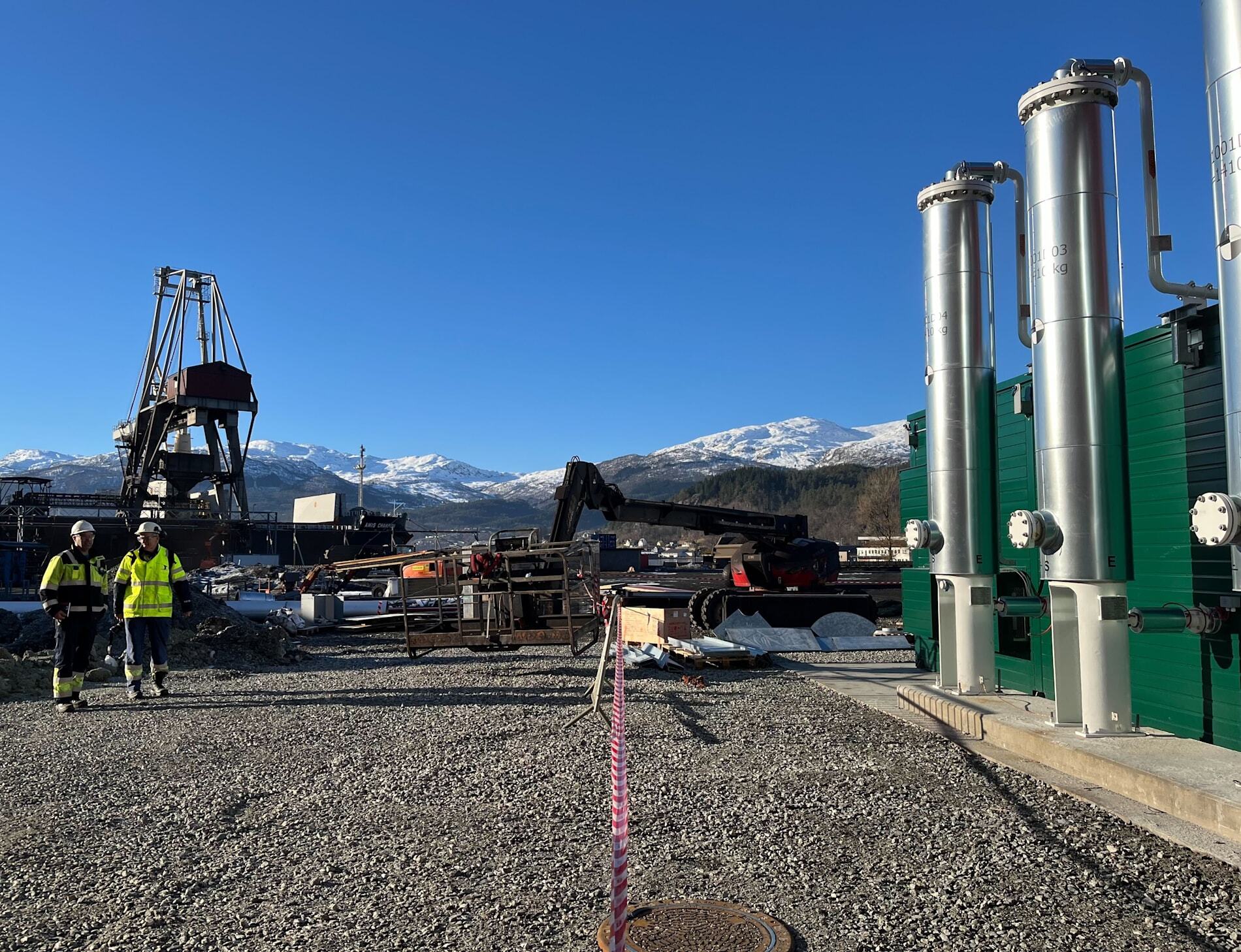 Part of the carbon capture pilot facility at Eramet. Photo: Eilin Lindvoll, Stavanger Aftenblad
A platform for future investment
Sauda has renewable power, industrial competence and a compact industrial environment that supports cooperation. With the right projects and partnerships, it can become a strong showcase for industrial symbiosis in Rogaland, while continuing to deliver long-term value creation for the region.
For companies looking for business opportunities in Norway, Sauda provides a reliable base for efficient industrial growth and green innovation.
If you would like to explore opportunities in Sauda or the wider Rogaland region, please get in touch with:
Tore Meinert
tore.meinert@rogfk.no
+47 97 03 33 60
Evelien Gebuis
evelien.gebuis@rogfk.no
+47 97 82 43 74